
White Horse Temple
White Horse Temple
White Horse Temple
White Horse Temple
White Horse Temple
White Horse Temple
White Horse Temple
White Horse Temple
White Horse Temple
.png)
Tour Code : C1757
.png)
Type : Historic sites
.png)
City / Province : Luoyang (Longmen、Shaolin)
.png)
Built in : 68.B.C
White Horse Temple
White Horse Temple
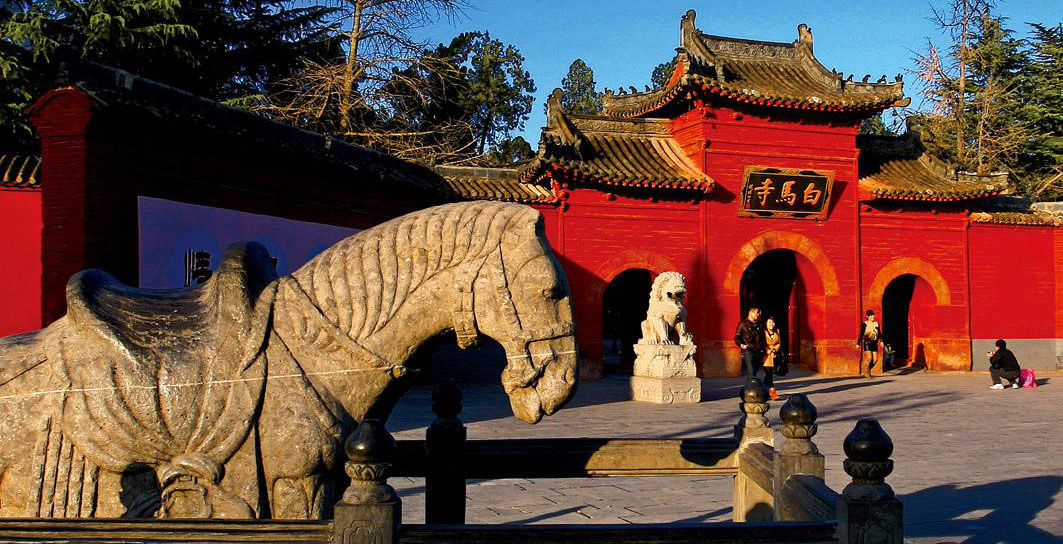
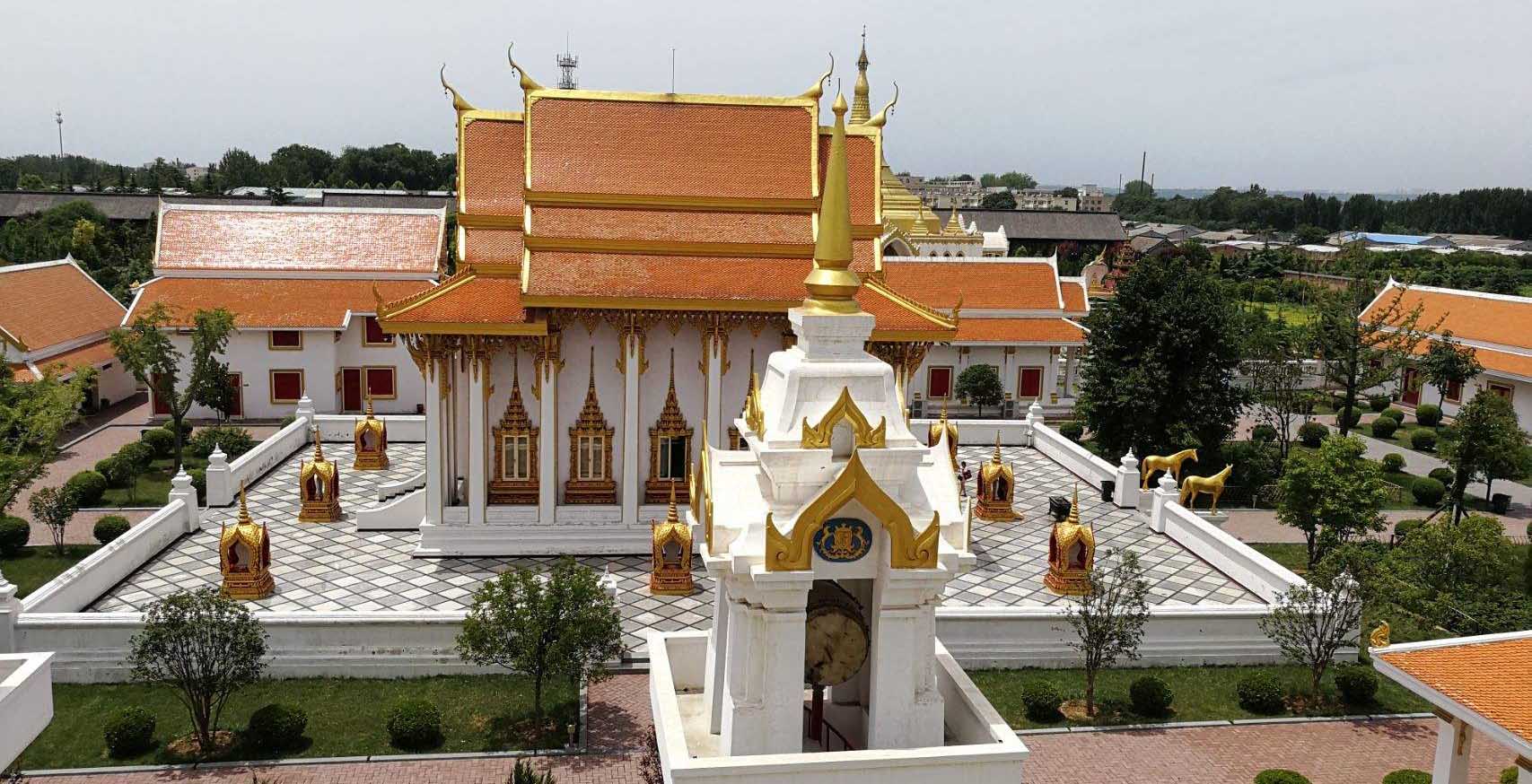
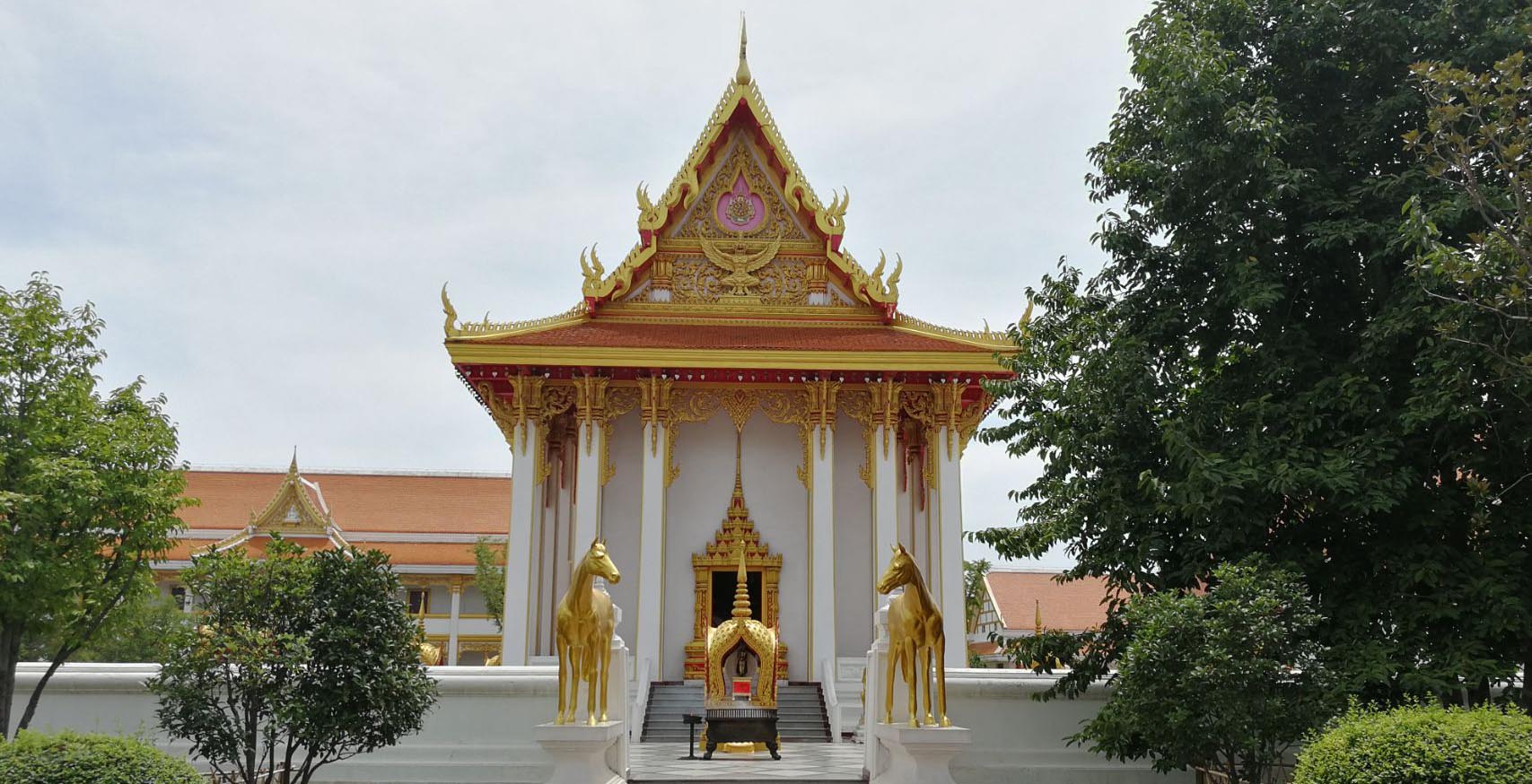
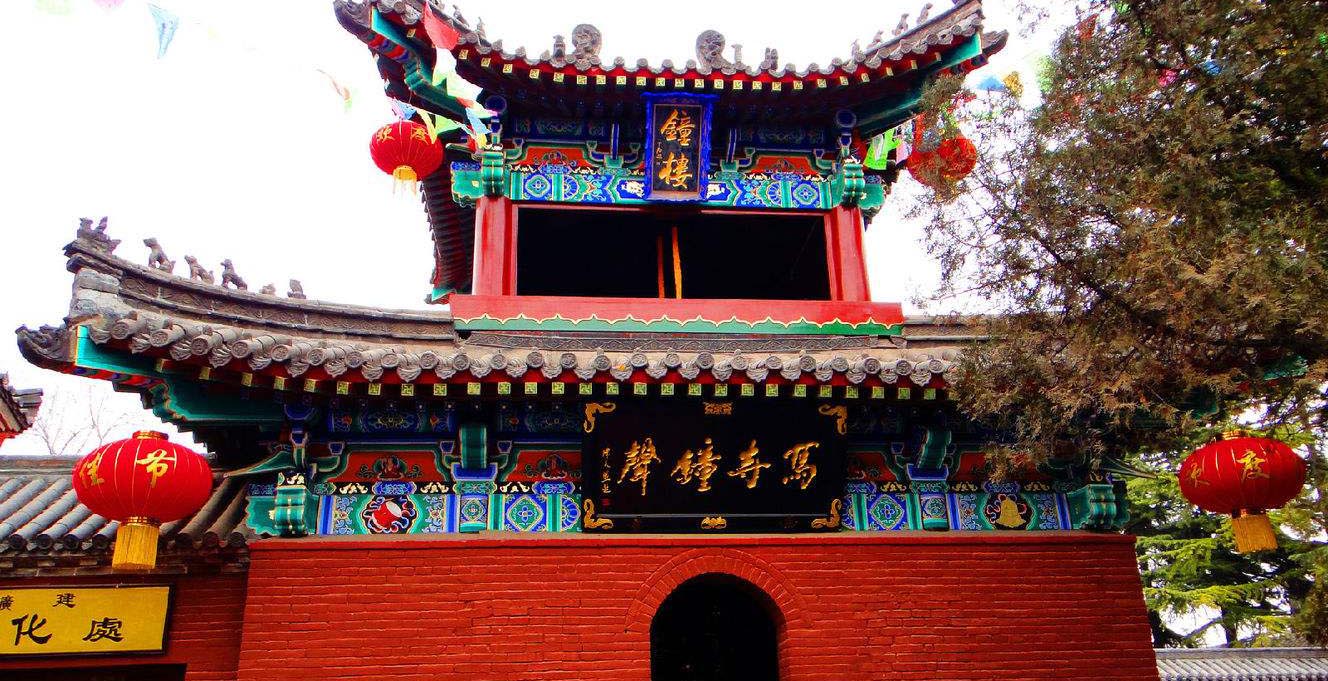
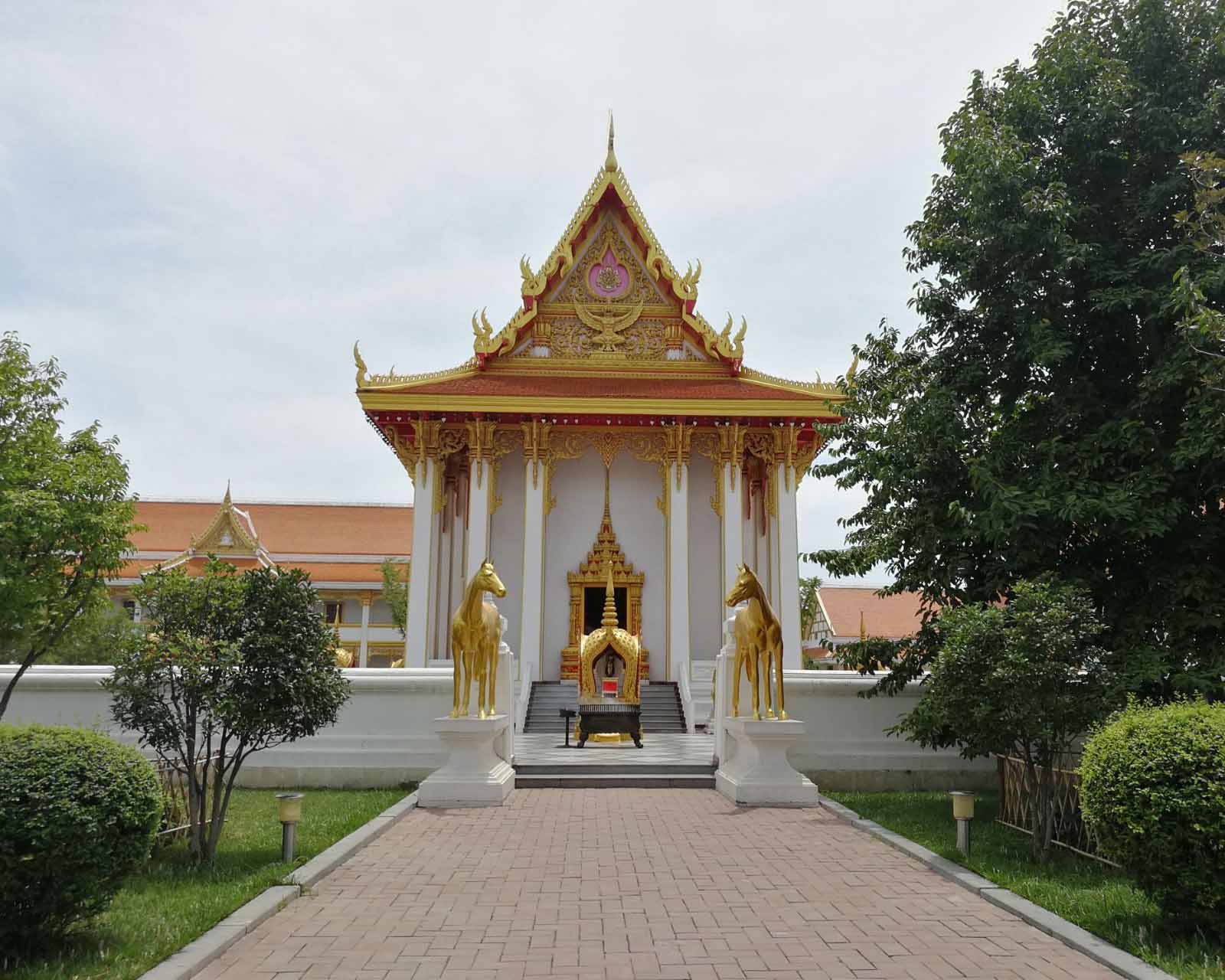
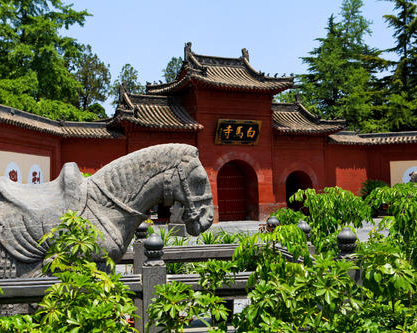
White Horse Temple is about seven miles away from the city Louyang. White Horse Temple is an ancient architecture keeping complete for over 1,900 years. In 64, during the Dynasty of Eastern Han, Emperor Ming sent a delegation to study Buddhism from the western world. Three years later, two eminent Indian monks, She Moteng and Zhu Falan came to China with the delegation. They themselves brought a white horse carried with Buddhist sutras and Buddhist figures. This is the origin of Buddhism in China. Since then, Buddhism began to pass around in China. In order to appreciate the two monks and the white horse with them, in the next year, the emperor ordered to build a monastery named as “the White Horse Temple”. The two Indian monks translated 'Forty-two Chapter Sutra' to Chinese. Since then, the White Horse Temple became an education center for Buddhist study in China. Thus the temple is reputed as the “Founder's Home” and “the Cradle of Buddhism in China”.
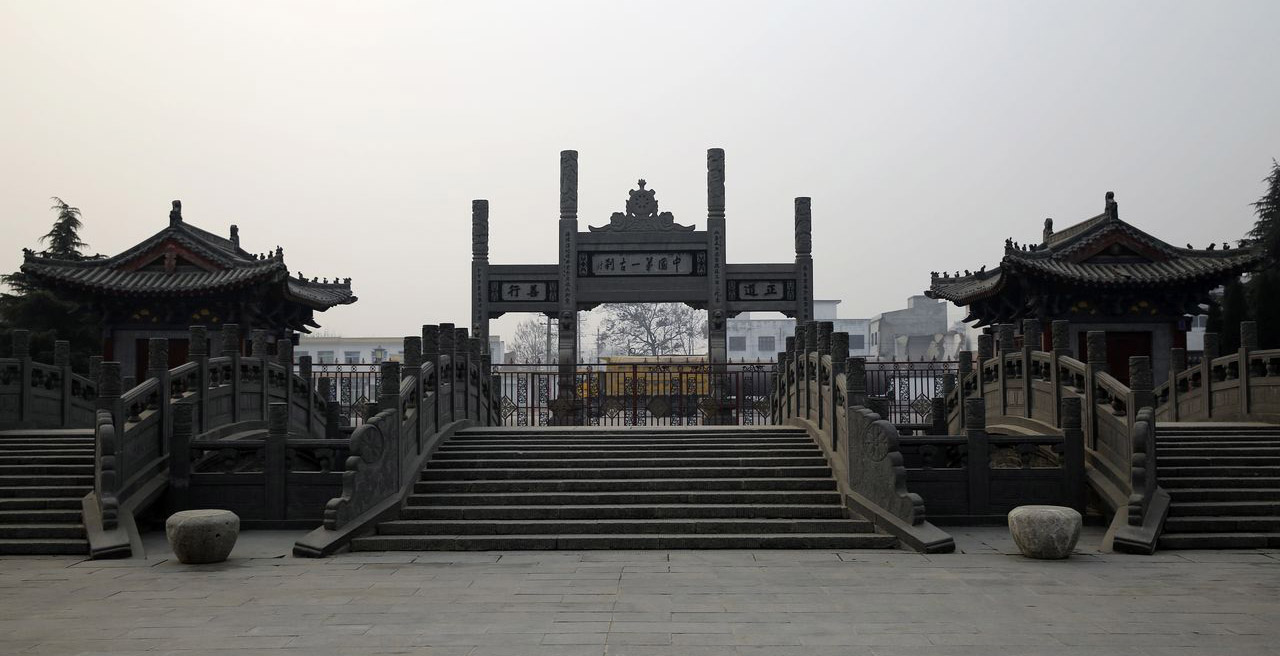
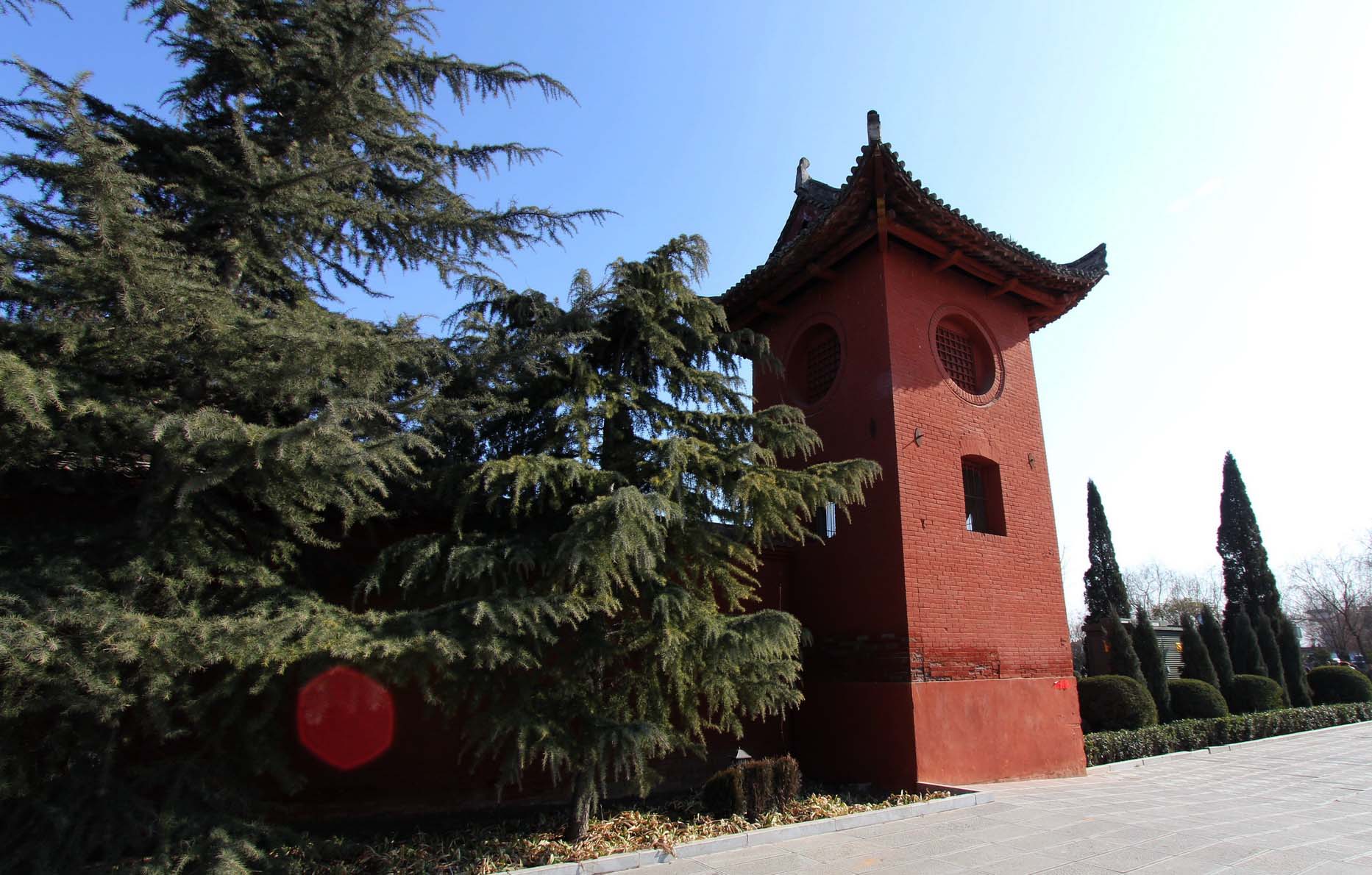
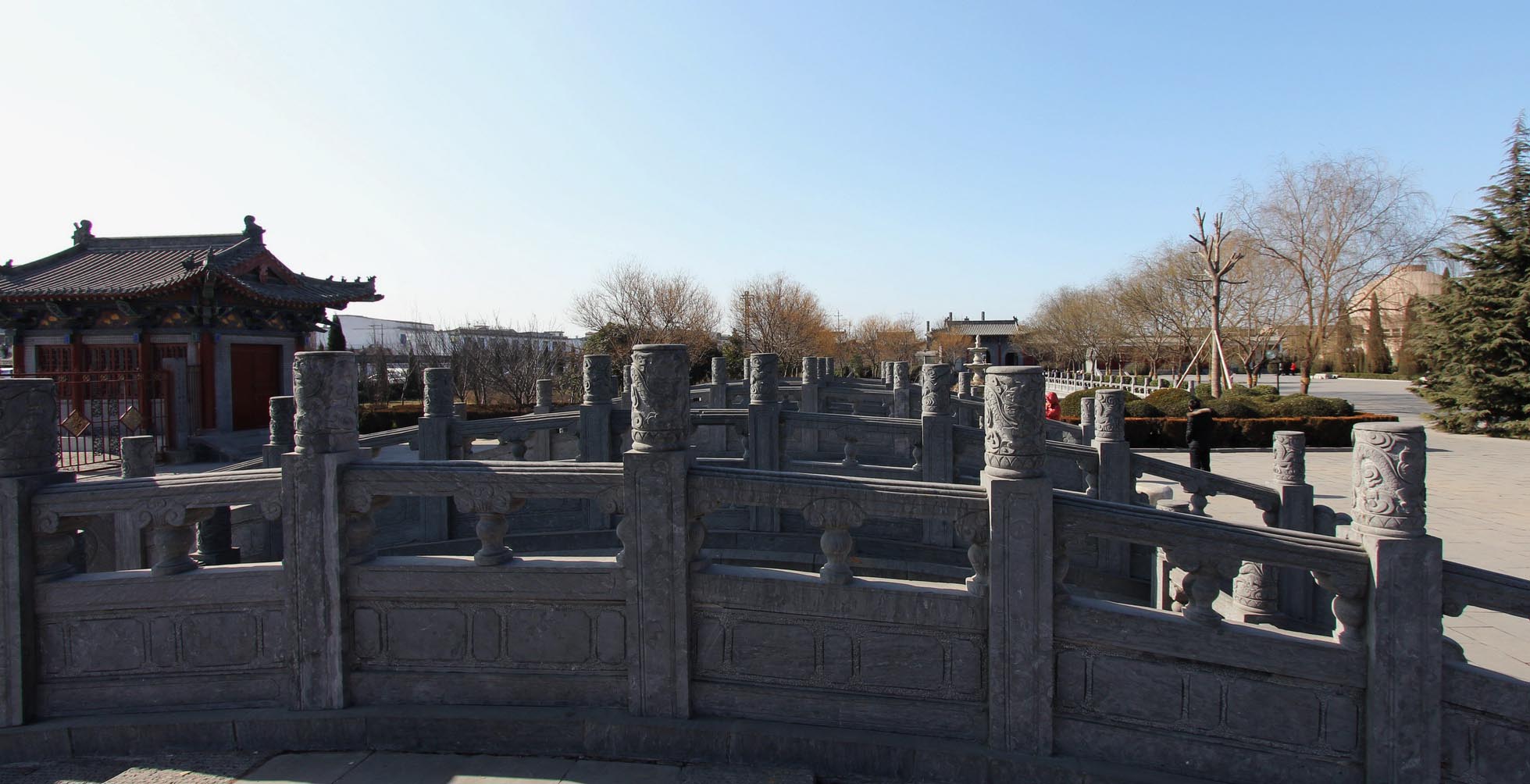
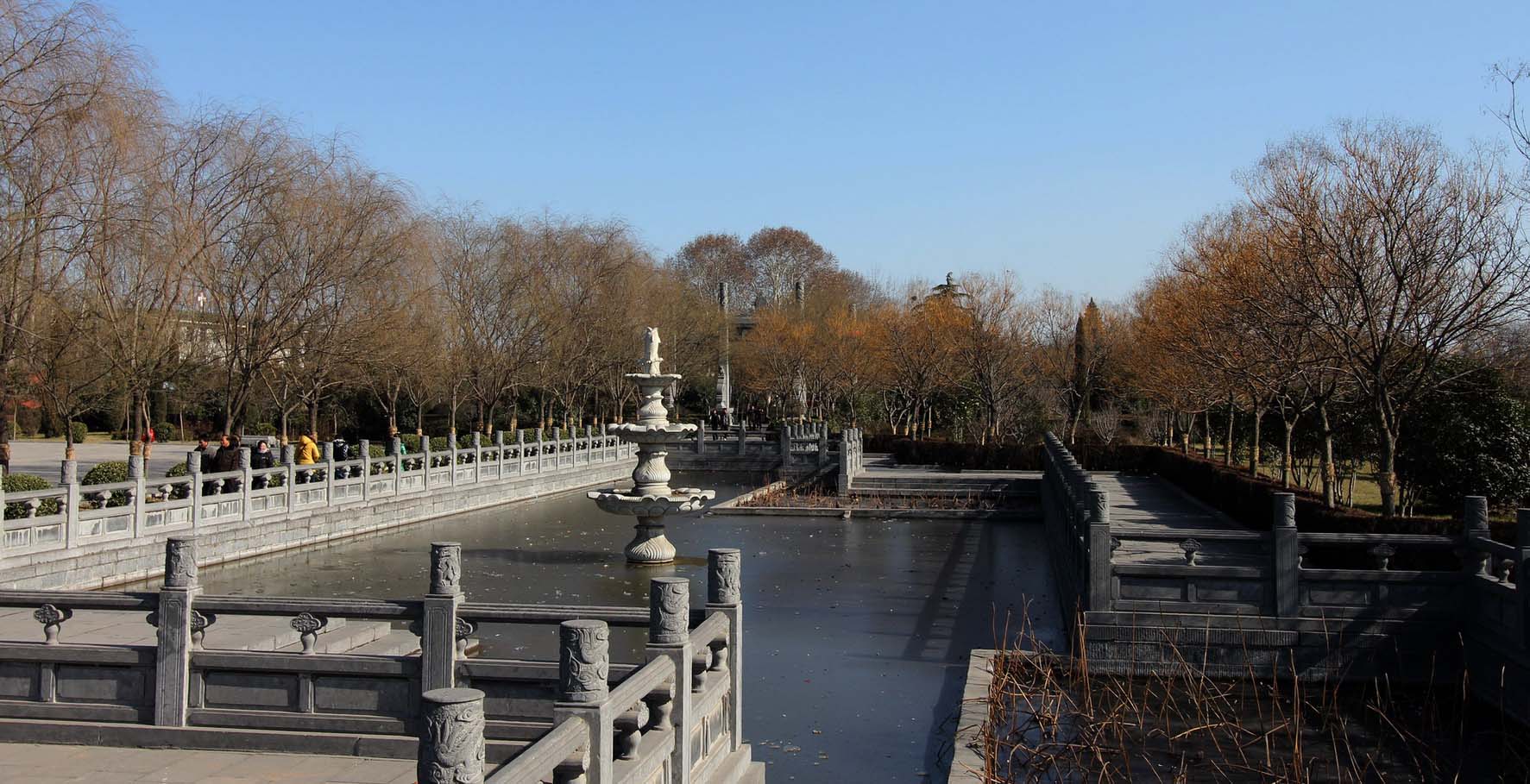
The White Horse Temple is fully covered with old trees. It appears very quiet and sacred. Outside the gate, there is a fenced fish pool . The pool is for the believers to set free the animals for getting more blessings from the Buddha. After stepping cross the pool via a stone bridge, you will walk into the temple. The tombs of She Moteng and Zhu Falan are located on both sides. There is a tablet pavilion from the east corner. A Chinese calligrapher abbot Shamen Wencai left his works on the tablet.
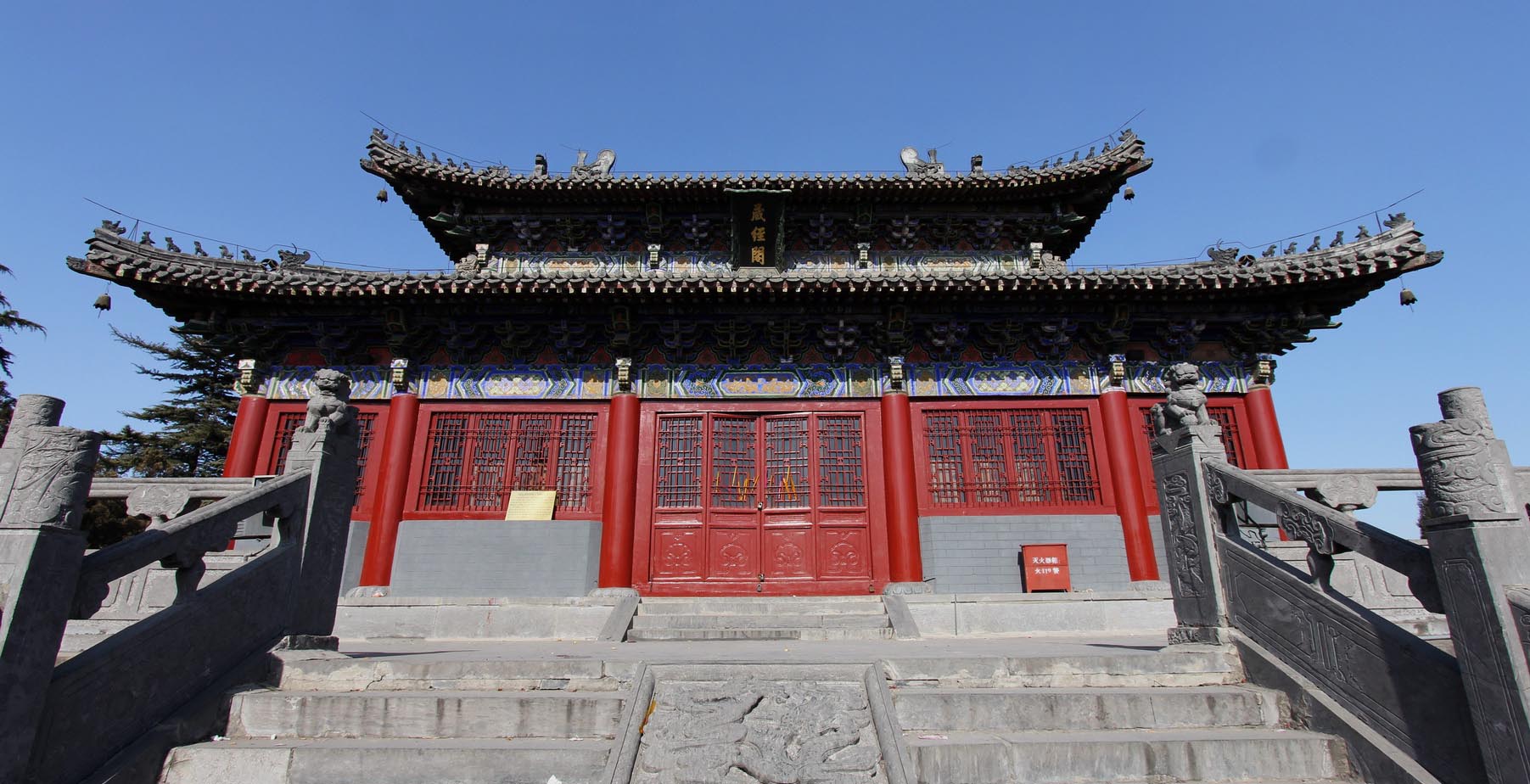
In the temple, there are the Hall of Heavenly Kings, the Hall of the Great Buddha, the Hall of Mahavira, the Hall of Guidance, the Cool and Clear Terrace in order.
Hall of Heavenly Kings was built in the Yuan Dynasty. There is a laughing Buddha - Maitreya sitting in the middle of the Hall. The Buddha was once disguised as a beggar with a purse but actually the purse had all the wealth in the world. The shrine was made of wood engraved with over 50 living dragons and was a masterpiece in Qing Dynasty. Four majestic 'Celestial Kings' stands on both sides. They were made by clay and all holding different weapons. .
Hall of the Great Buddha was the most magnificent architecture. The roof was covered with exquisite pantiles. The hall was built in Dynasty Ming style including the upturned eaves and the bracket system. The Buddhist patriarch Sakyamuni situated in the middle of the hall for blessing the believers. Kasyapa and Ananda are two disciples. Manjusri, the Bodhisattva of Wisdom, is the one with sutra in his hands. The other is the Samantabhadra, Bodhisattva of Universal Benevolence. All of these statues had a sophisticated and exquisite craftsmanship.
The hall of Guidance has the Buddha Amitabha and is the smallest hall in the White Horse Temple. The Buddha Amitabha is responsible for the Western Paradise. The Bodhisattva of Moonlight and the Goddess of Mercy are on both side. Both of them were build by clay in the Qing Dynasty. “ Buddha Amitabha” is able to lead the life of believers to the Paradise after death. Amitabha is thus reputed as the Buddha of Guidance, which is also the source for the name of the hall.
Hall of Mahavira is the most refurbished hall in the temple. The roof of the hall is engraved with colorful lotus patterns while the walls are engraved with thousands of Buddhist figures made by wood. There is a two-storey Buddhist shrine exquisitely engraved with flying birds and winding dragons in the center of the hall. There are three saints “Sakyamuni, Amitabha and the Buddha of Medicine” with the eighteen arhats in the hall. They were all made from silk and hemp. Everyone of them weighs three to five kilograms. The colors of the statues look fresh even for today. All of them are valueless national antiques.
The Cool and Clear Terrace is a high brick terrace built in the yard at the rear of the temple. The Cool and Clear Terrace is for keeping the sutras and Buddhist figures brought back to the white horse from western. The two Indian monks translated the sutras during the Eastern Han Dynasty in the Cool and Clear Terrace. Because the terrace was the place for Buddhist sutras translated and thus it is one of the most famous locations in the temple.
Outside the White Horse Temple, a tiered brick pagoda named as Qiyun Pagoda is one of the oldest pagodas in China. The pagoda is an important ancient architecture in Luoyang and also one of the most precious architecture from Jin Dynasty in the Central Plains of China. From the south of the pagoda, clapping your hands, the echoes is similar to the frogs croaking. Many curious tourists try to experience the weird thing here.
Got Question & Quick Answer
.png)
.png)
CONTACT INFO
PHONE:
EMAIL:
marcopolo@chinatoursnet.comWhatsApp:+86-13683536536iMessage:+86-13683536536
ADDRESS:
Room 208,Business Building AQiantongtian.Longgang Road,Haidian district,Beijing
WeChat:chinatoursnetSkype:chinatoursnet@outlook.com
WHY CHOOSE US

1:We are in Beijing
2:No hidden fees
3:Downtown hotel
4:professional tour guildes and drivers
5:Flexible tour time,private tour group,customized tour service
6:free mineral water
7:Guarantee enough visiting time
8:Guarantee your satisfactory with your choice
HELPFUL REFS
FOLLOW US ON WECHAT
.png)
JOIN US ON
.png)
.png)
.png)
.png)